Investment
Investment Properties in Dartmouth: A 2026 Analysis
Dartmouth has quietly become one of the strongest real estate investment markets in Atlantic Canada.

Nyssa Carter, REALTOR®
The Agency Halifax10 min read
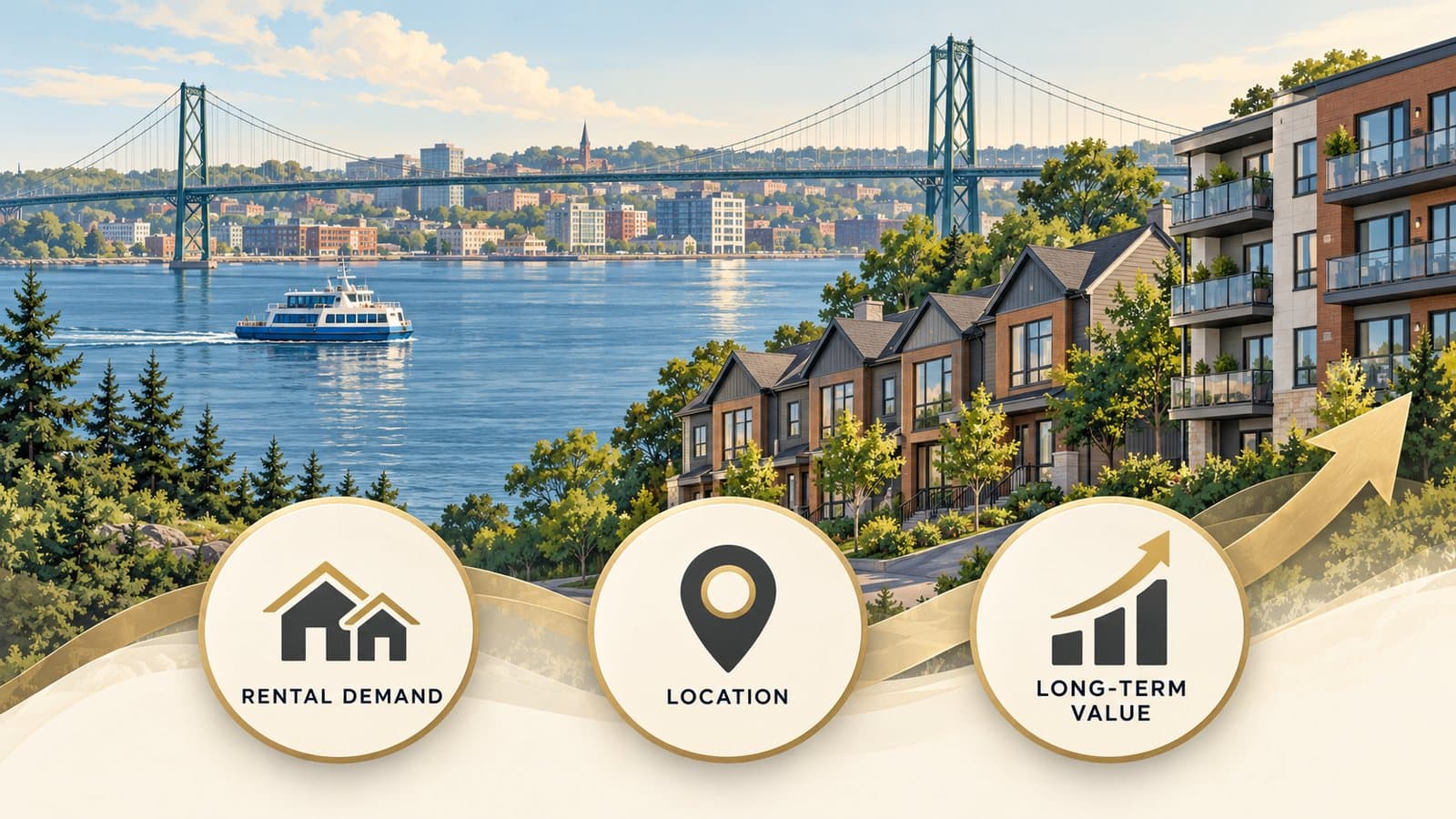
If you're looking for real estate investment opportunities in Nova Scotia, Dartmouth should be at the top of your list. While Halifax Peninsula gets the glamour, Dartmouth is delivering the returns. Let me break down why.
The Investment Thesis
Dartmouth's investment case rests on three pillars:
- Relative affordability — 15-25% lower entry costs than comparable Halifax locations
- Infrastructure investment — Over $500M in public and private development underway
- Growing rental demand — Population growth, university expansion, and immigration driving demand
The Numbers
Here's what the current Dartmouth investment landscape looks like:
Single-Family Rentals
- Average purchase price: $425,000–$575,000
- Monthly rent (3-bed): $2,200–$2,800
- Gross yield: 5.5–7.2%
- Vacancy rate: Under 2% (extremely tight)
Multi-Unit (Duplex/Triplex)
- Average purchase price: $500,000–$750,000
- Monthly gross rent: $4,000–$6,500
- Gross yield: 8–10%
- Cap rate: 5.5–7%
Condos (Waterfront/Downtown Dartmouth)
- Average purchase price: $320,000–$480,000
- Monthly rent (1-2 bed): $1,600–$2,200
- Gross yield: 5–6%
- Appreciation potential: Strong (infrastructure investment)
Dartmouth offers something rare in Canadian real estate: positive cash flow from day one on well-selected properties. That's increasingly hard to find in 2026.
Where to Invest
Dartmouth Waterfront / Downtown Core
The transformation here is real. King's Wharf, new condo developments, and the revitalized Alderney area are creating genuine urban density. This is your appreciation play: buy now, benefit from the ongoing transformation.
North Dartmouth
An emerging market with strong fundamentals. Lower entry prices, improving amenities, and proximity to the Burnside Industrial Park (Atlantic Canada's largest) ensure steady rental demand from workers.
Cole Harbour / Eastern Passage
Family-oriented communities with strong rental demand. These areas attract families who need affordable housing near schools and amenities. Yields are strong, and properties are easier to manage.
Portland Street Corridor
The "Main Street" of Dartmouth is seeing renewed investment. Properties along this corridor benefit from commercial foot traffic, transit improvements, and a growing dining/retail scene.
Infrastructure Driving Value
Several major projects are reshaping Dartmouth's investment landscape:
- Rapid Transit (BRT): The Halifax-Dartmouth Bus Rapid Transit system will improve commute times and property values along the route
- Shannon Park Redevelopment: The former military housing site is being transformed into a mixed-use community, one of the largest urban redevelopments in Atlantic Canada
- Dartmouth Crossing Expansion: Continued commercial growth in this major retail and commercial hub
- Ferry Terminal Upgrades: Improved harbour ferry service makes Dartmouth waterfront living more attractive for Halifax commuters
Tax Considerations
Nova Scotia's tax environment for real estate investors:
- Property tax: Dartmouth rates are competitive (similar to Halifax)
- Deed transfer tax: A municipal tax; in Halifax Regional Municipality (which includes Dartmouth) it is 1.5% of the purchase price
- No provincial land transfer tax (unlike Ontario and BC)
- Rental income taxation: Standard Canadian tax rules apply
- Capital gains: 50% inclusion rate on disposition
Risks to Consider
Honest assessment of the risks:
- Interest rate sensitivity — Investment properties typically require 20% down and qualify at higher rates
- Tenant management — Nova Scotia's tenancy laws strongly protect tenants. Know the rules.
- Aging housing stock — Many Dartmouth properties are older. Budget for capital expenditures.
- Market concentration — Halifax/Dartmouth is a relatively small market. Liquidity can be lower in downturns.
- Insurance costs — Rising across Nova Scotia. Factor this into your pro forma.
My Investment Criteria
When evaluating Dartmouth investment properties for clients, I look for:
- Cash flow positive from month one (after all expenses including vacancy reserve)
- Properties near transit routes and amenities (future-proofing for appreciation)
- Legal secondary suite potential (doubles your income on single-family)
- Structural soundness over cosmetic appeal (renovate cosmetics, avoid structural issues)
- Strong rental comparables within 500m radius
Getting Started
If you're considering a Dartmouth investment property:
- Set your investment criteria — Cash flow vs. appreciation? Hands-on vs. hands-off?
- Get financing pre-approved — Investment property mortgages have different rules
- Understand the numbers — I can help you run detailed pro formas on specific properties
- Build your team — Property manager, accountant, and lawyer who understand investment real estate
- Act decisively — Good investment properties in Dartmouth don't last long
I work with both first-time investors and experienced portfolio builders. If you'd like to discuss specific Dartmouth opportunities, reach out. I'll share what I'm seeing on the ground.